
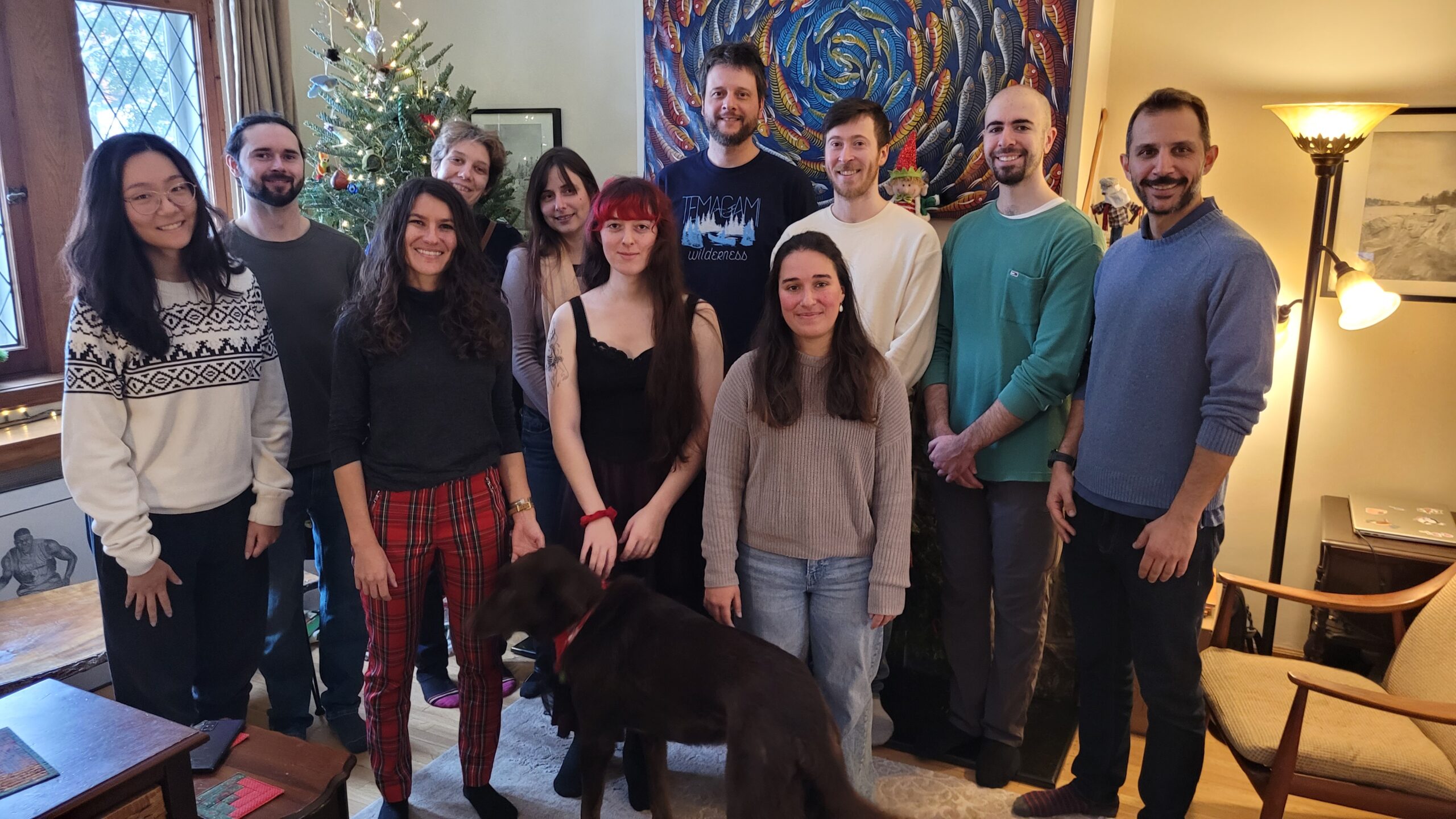
The Fraser Lab celebrating another successful year in research, knowledge capacity building and public outreach activities, December 2024. Left to right: Deschanel Li, Anthony Arsenault, Thais Bernos, Alex Engler, Julie Gibelli, Lizbeth Pepin, Dylan Fraser, Sofia D’Angelo, Johnathan Lemay, Badrouyk Chamlian, Sozos Michaelides
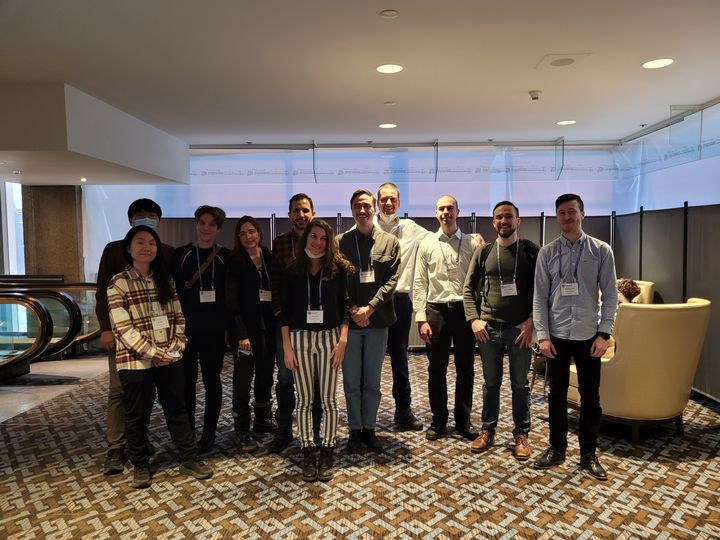
The Fraser Lab at the inaugural Society of Canadian Aquatic Sciences conference, Montreal, QC (2023). Pictured from left to right: Hari Won, Hyung-Bae Jeon, Alexandra Engler, Julie Gibelli, Sozos Michaelides, Thais Bernos, Dylan Fraser, Badrouyk Chamlian, Brian Gallagher, Johnathan Lemay
Current team (winter 2025): ten research personnel (2 Postdocs, 4 PhD, 1 MSc, 2 BSc, 1 RA):
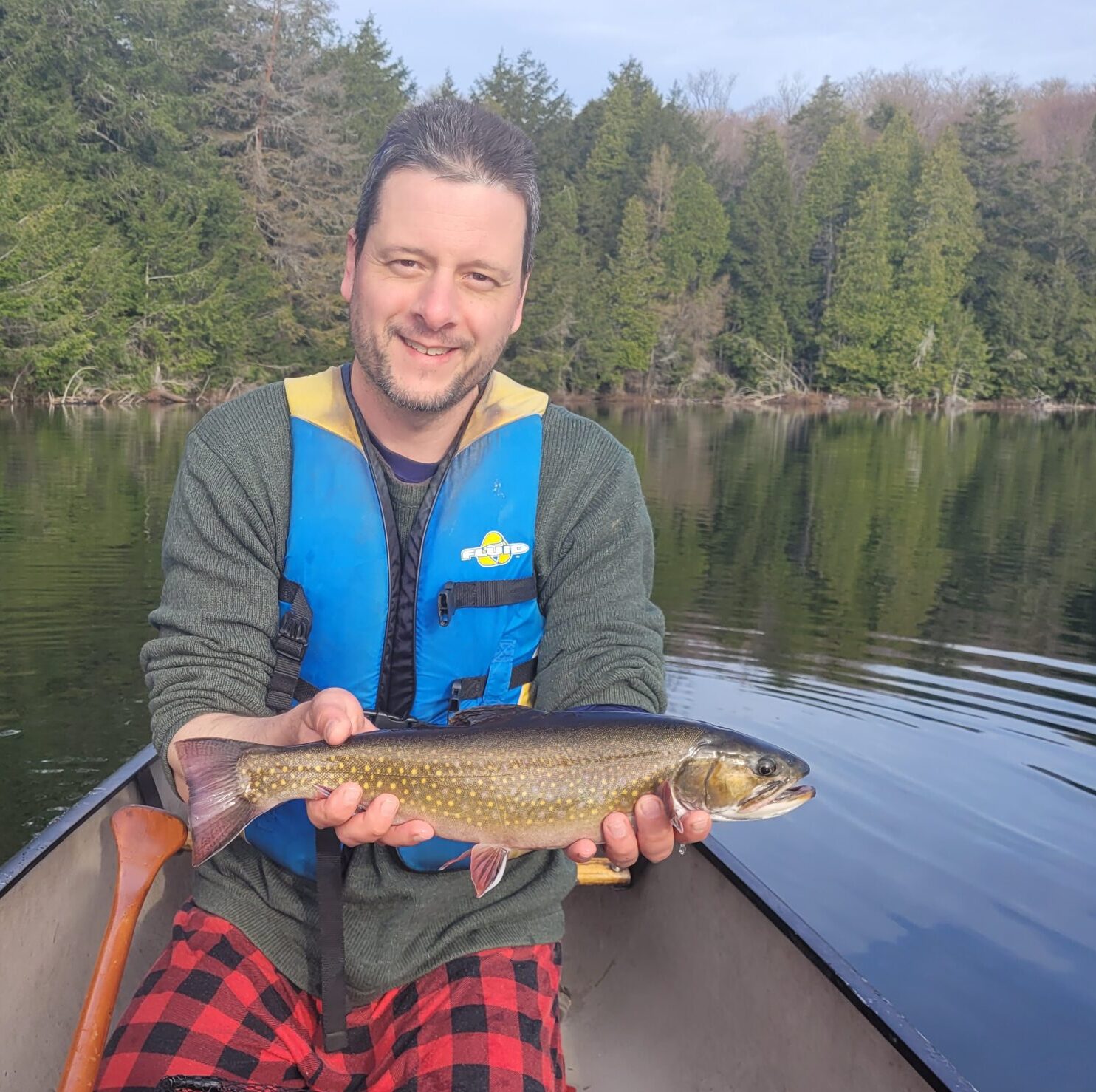 Dr. Dylan Fraser (Principal Investigator) Dylan is fascinated with the population diversity found within virtually any species: (i) how does such diversity arise? (ii) How does the evolution of population diversity affect species’ responses to environmental change? (iii) How best do we prioritize it for conservation and sustainable development? Will small populations adapt in the face of environmental change? He grew up in Ontario fishing, canoeing, skiing, hiking, mountain biking, cooking and playing baseball. He did a BSc in Fisheries Biology at the University of Guelph and then a PhD at Laval U. with Louis Bernatchez. He was an NSERC Postdoctoral fellow for three years at Dalhousie U. with Jeffrey Hutchings before starting at Concordia U.
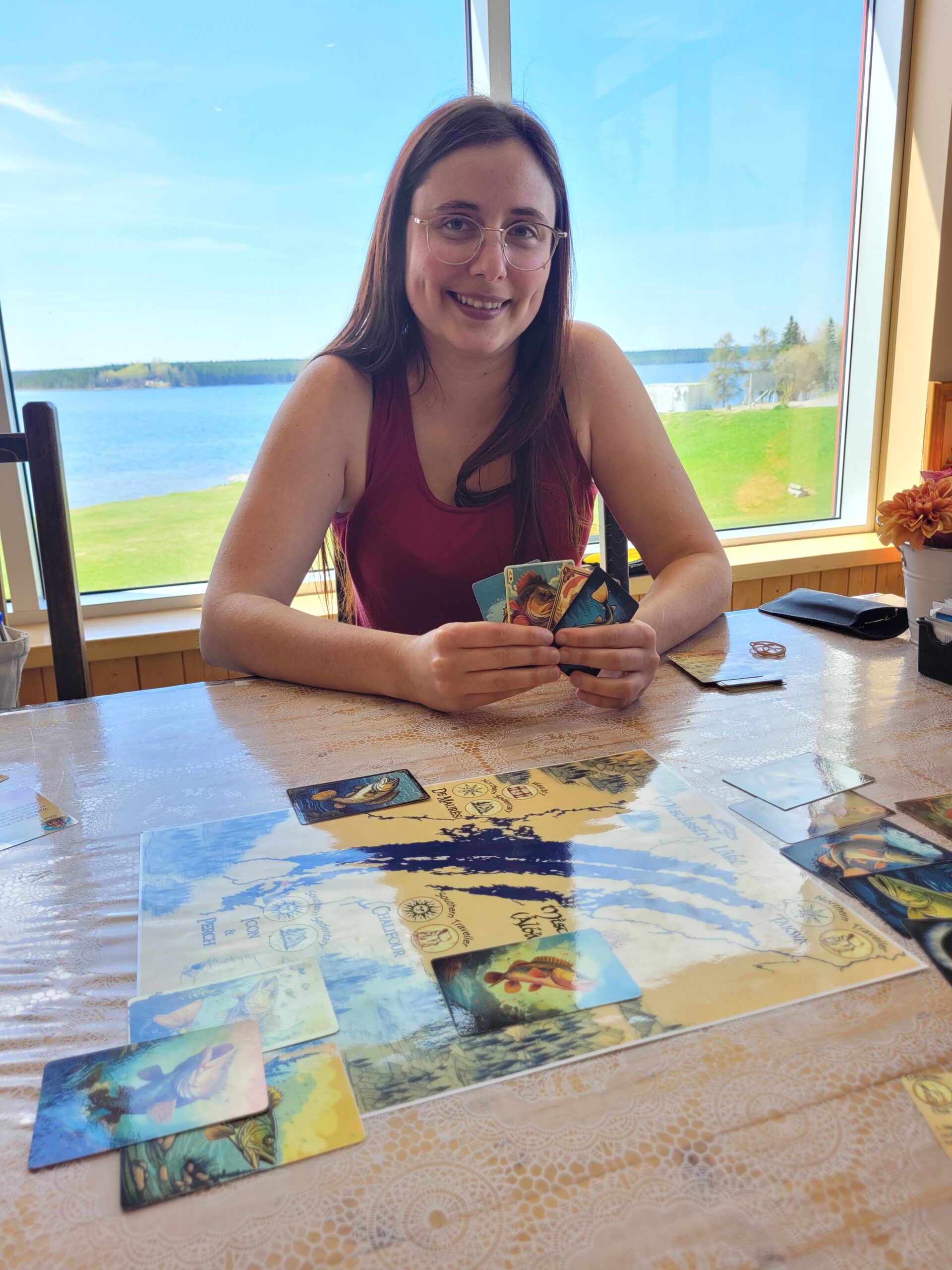 Dr. Julie Gibelli (Postdoctoral Fellow, 2024-present) Julie is conducting population genomic assessments of mixed-stock harvests for a number of fisheries that are important for Firsts Nations, Metis communities and government agencies in northern Quebec and the Peace River-Lake Athabasca region of northern Alberta. She also develops public outreach materials to promote awareness of the application of genomic research for local community stewardship of natural resources.
 Dr. Sozos Michailidis (Postdoctoral Fellow 2020-present) Sozos studies the population genomics of freshwater fishes in northern Canada that are culturally and socio-economically important for Indigenous fisheries and communities, with applications to local community management initiatives through the FISHES project http://fishes-project.ibis.ulaval.ca/
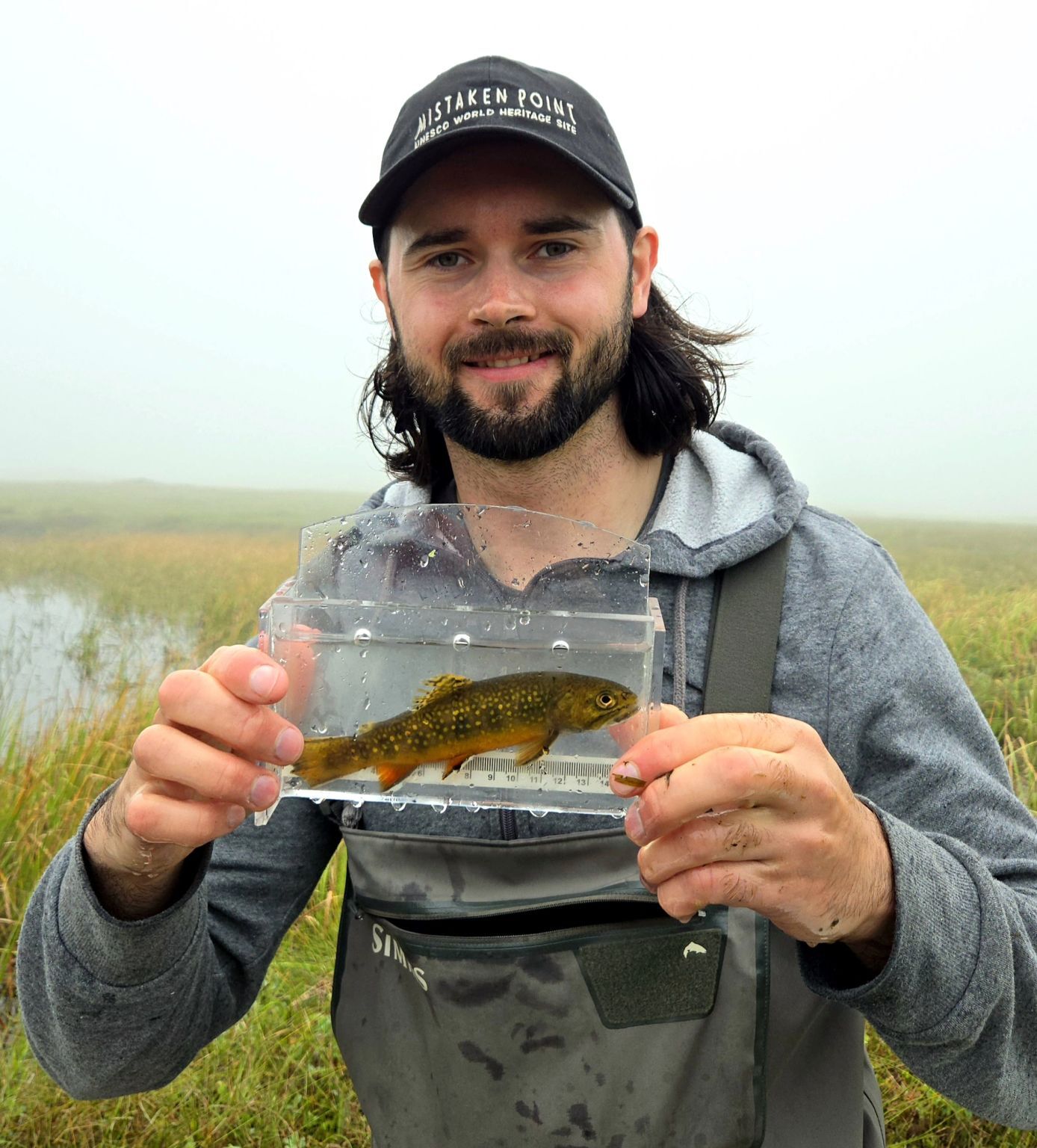 Anthony Arsenault (PhD student 2024-present) Anthony is exploring various ecosystem factors, abiotic and biotic, that drive biomass and production dynamics, as well as life history and phenotypic traits, in brook trout within the unique stream ecosystems of Cape Race. His research includes a global meta-analysis of salmonid biomass and production, expanding on prior studies focused mainly on physical habitat by incorporating water chemistry and biological factors. He is deeply passionate about brook trout and is interested in integrating fish ecology and limnology (co-supervisor, Alison Derry, UQAM).
 Snigdhodeb Dutta (PhD student, 2024-present) Snigdho’s research investigates the impacts of climate change on freshwater fish populations, with a focus on brook trout, across various spatial and temporal scales. By examining how changes in temperature, streamflow, and extreme climate events influence fish abundance, growth, and life history traits, his work aims at uncovering the resilience of cold-water species to climate stressors. His dissertation combines field studies with a meta-analysis of climate extremes, exploring population responses, age-class dynamics, and interspecific interactions. The results will contribute to ecosystem-based fisheries management strategies and advance global conservation efforts for freshwater biodiversity in the milieu of climate change.
 Raphael Bouchard (NSERC A-Bell Scholar, PhD student 2021-present) Raphael studies the population genomics of Cisco Lake Whitefish and Brook Trout in James Bay, Quebec, species that are culturally and socio-economically important for Indigenous Cree fisheries and communities, with applications to local community management initiatives through FISHES http://fishes-project.ibis.ulaval.ca/ (co-supervisor: Dr. Louis Bernatchez, U. Laval)
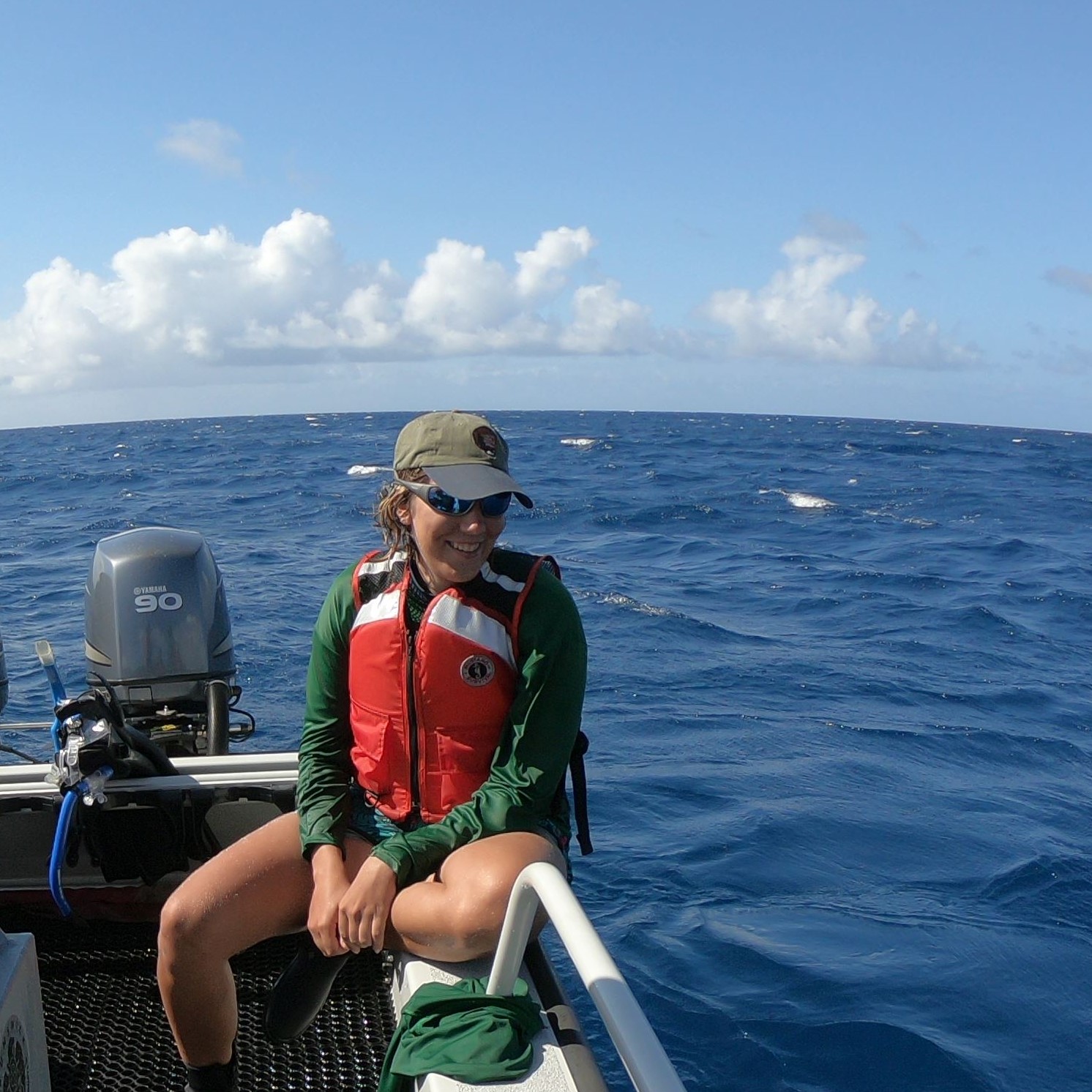 Alexandra Engler (PhD 2019-present) Alexandra is investigating the underlying mechanisms of species coexistence in lake fishes (co-superviser: Dr. Pedro Peres-Neto, Concordia U.). During her PhD, she specifically plans to explore the functional diversity and redundancy of freshwater fish communities of Ontario’s lakes.
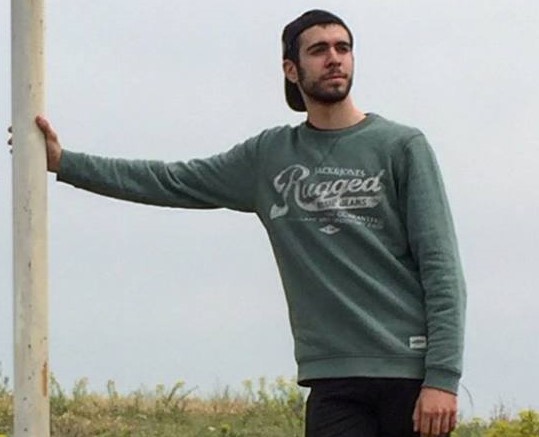 Badrouyk Chamlian (Research Associate, 2024-present) Badrouyk coordinates data storage/sharing and laboratory genomic work within the lab in a number of contexts, but especially for research collaborations involving Indigenous partners in northern Canada.
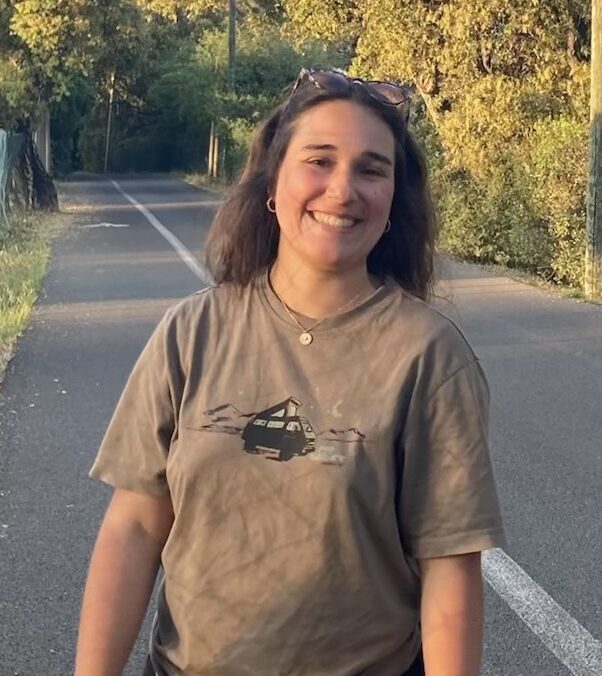 Sofia D’Angelo (Msc 2023-present) Sofia is examining the role of environmental variability in affecting intraspecific life histories and fitness. Her focus is several divergent populations of brook trout from Cape Race, Newfoundland.
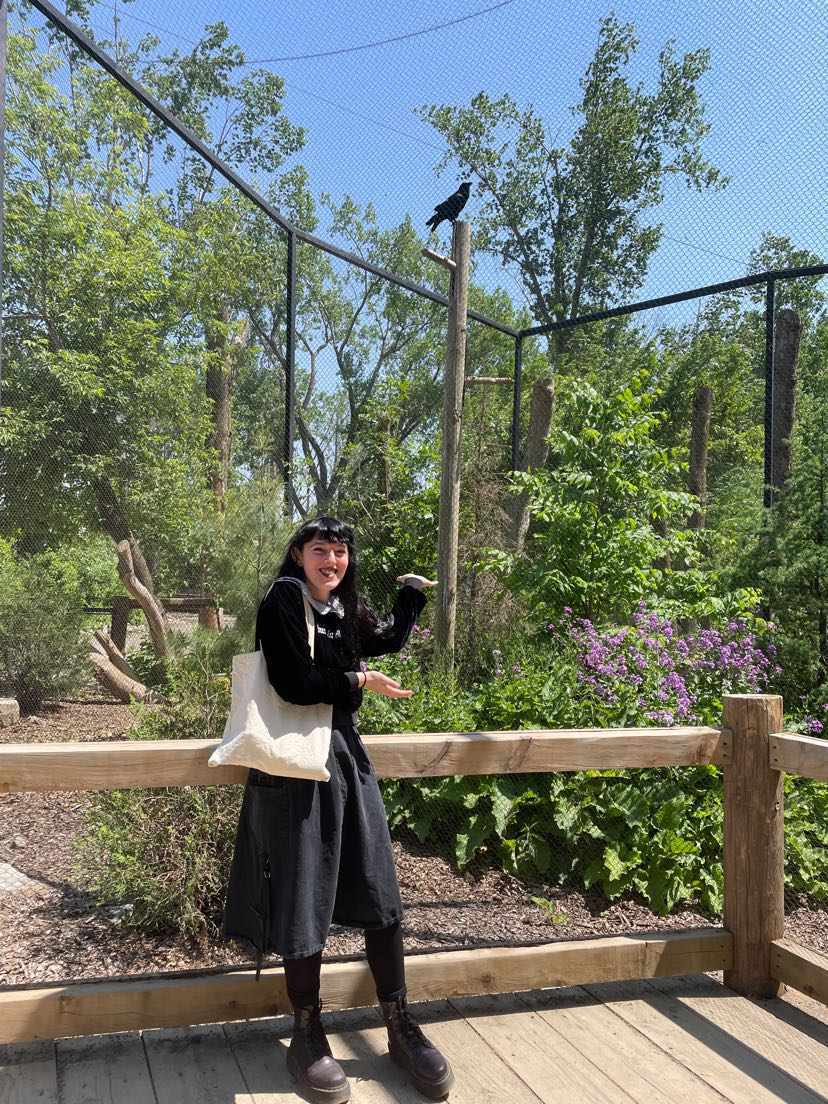 Lizbeth Pepin (BSc student, 2024-present) Lizbeth is investigating effective population size (the genetic size a population) in brook trout across their native range and the impact human activities have on them. Her work also explores how natural isolation of populations may impact effective population size. Lizbeth is passionate about conservation biology and a more inclusive environment in STEM.
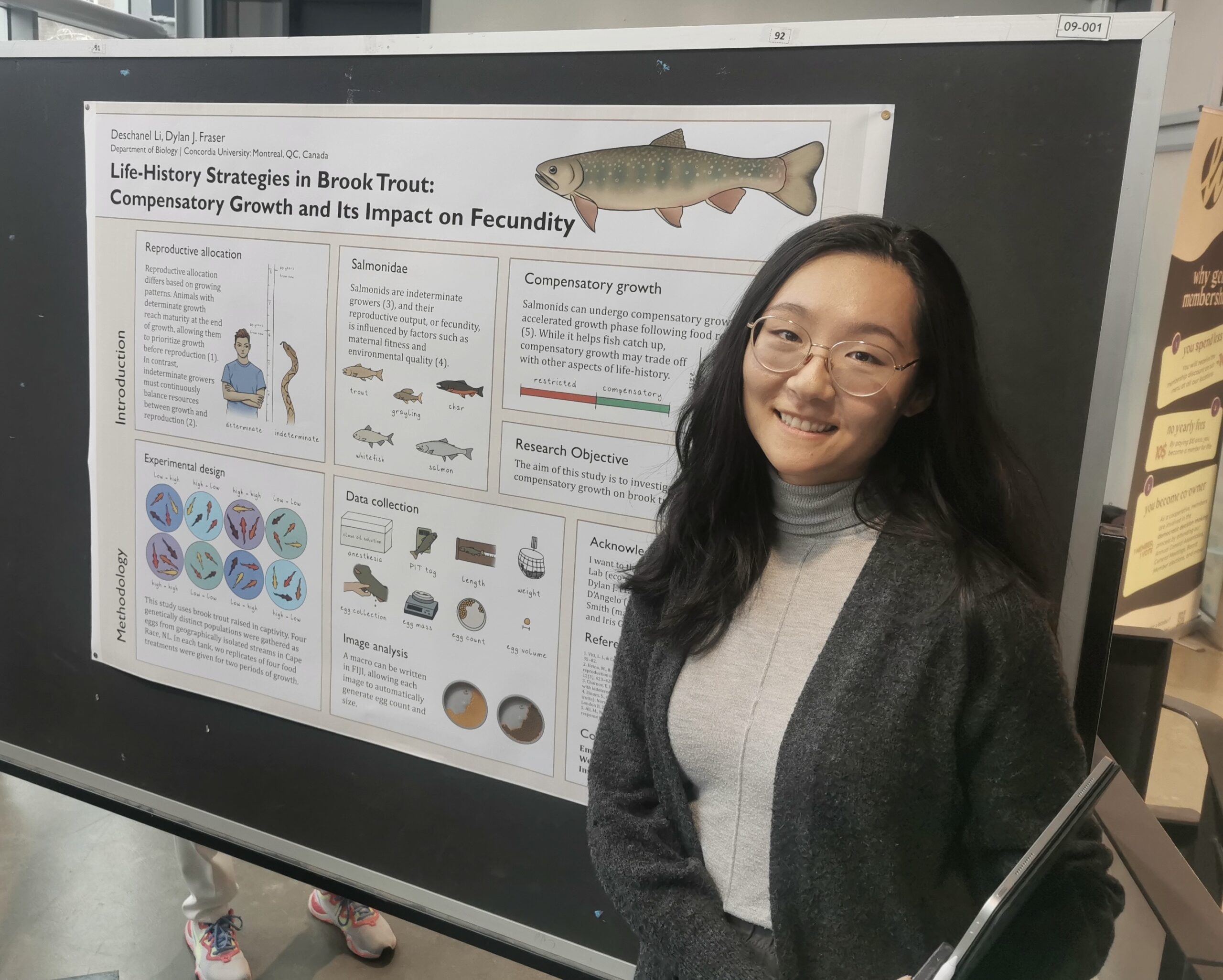 Deschanel Li (BSc student, 2024-present) Deschanel’s research examines how compensatory growth—a phase of accelerated growth following food restriction—impacts fecundity in brook trout, focusing on the potential trade-offs between growth and reproduction. Her work also involves developing macros in FIJI to automate egg counting from high-resolution images. Deschanel is particularly interested in using technology to streamline research workflows and is dedicated to science communication: making complex scientific ideas accessible and engaging to a wide audience.
PREVIOUSLY SUPERVISED STUDENTS
Postdoctoral Fellows
Thais Bernos, 2023-2024 (now professor, U. of Vermont, U.S.A.)
Jukka-Pekka Verta (visiting), 2023-2024 (now professor, Nord University, Norway)
Hyung-Bae Jeon, 2018-2023 (now scientist, Nat. Inst. Biol. Res. South Korea)
Hari Won, 2021-2023 (now scientist, Yeungnam U., South Korea)
Jean-Michel Matte, 2020-2022 (now Postdoc, DFO)
Matthew Yates, 2018-2021, FQRNT Fellow (now NSERC Postdoc, U. Windsor)
Elizabeth Lawrence, 2021 (now Data Analyst, UNESCO)
Ella Bowles, 2016-2019, MITACS Fellow (now Research Scientist, ECC Canada)
Paul Debes, 2014-2015 (now professor, Holar University College, Iceland)
PhD
Brian Gallagher, PhD 2024, Fulbright Scholar (now Postdoc, U.S. E.P.A.)
Jean-Michel Matte, PhD 2020 (now Research Scientist, DFO)
Elizabeth Lawrence, PhD 2020 Concordia NSER Scholar (now Data Analyst, UNESCO)
Matthew Yates, PhD 2018, NSERC Postgraduate Scholar (now Postdoc, U. Windsor)
Andrew Harbicht, PhD 2017, Concordia Grad Scholar (now Research Scientist, DFO)
Jacquelyn Wood, PhD 2014, NSERC Postgraduate Scholar (now OMNRF scientist)
Paul Debes, PhD 2013 (now university professor, Holar University College, Iceland)
MSc
Johnathan Lemay, MSc 2024 (now RA at Concordia U.)
Badrouyk Chamlian, MSc 2024, Concordia Grad Scholar (now RA at Concordia U.)
Julie Gibelli, MSc 2023, Concordia Merit Scholar (now postdoc, Concordia U.)
Shannon Clarke, MSc 2022, NSERC Scholar (now Biologist, DFO)
Timothy Law, MSc 2022, NSERC Scholar (now Enviromental Protection Officer for Kahnawake First Nations Reserve, Quebec)
Brent Brookes MSc 2020 (now Biologist, Envtal Consulting)
Dylan Glaser MSc 2020 (now Biologist, DFO)
Zachary Eisenhauer, MSc 2020 (now Fisheries Technician, USFWS, Vermont)
Nicole Hill, MSc 2018 (now Research Assistant, Calgary Zoo)
Ashlee Prevost, MSc 2018, Conc. Merit Scholar (now Biologist, Fraser R. Fish. Alliance)
Thais Bernos, MSc 2016, Conc. Graduate Scholar (now NSERC Vanier PhD, U. of T.)
Zachery Wells, MSc 2016 (now Biologist, Envtal Consulting)
Carol Zastavniouk, MSc 2016, FQRNT Scholar (now Biologist, Envtal Consulting)
Eric Brunsdon, MSc 2015 (now Biologist, DFO)
Shahinur Islam, MSc 2015, E. Darwin scholar (now Postdoc, U. California)
Kia Marin, MSc 2015 (now with RCMP Forensics)
Corey Clarke, MSc 2014, NSERC Canada Scholar (now Lead Biologist, Parks Canada)
Queenie Gray, MSc 2013 (now Biologist, Parks Canada)
Andrew Harbicht, MSc 2012 (now Research Scientist, DFO)
Aimee Lee Houde, MSc 2010, NSERC Scholar (now Biologist, Envtal Consulting)
Sebastian Belmar-Lucero, MSc 2010
BSc
Noemie Racine, BSc (Science College 290) 2024
Sarah Geargeoura, BSc 2021 (now MSc student, U. Toronto)
Ramela Koumrouyan, 2019, 2020 NSERC USRA (now PhD student, McGill U.)
Gillian Muir, BSc 2019 (now MSc student, Trent U.)
Gabrielle Nessel, BSc 2019
Danielle MacRae, BSc 2018, NSERC USRA (now MSc student, Concordia U.)
Clea Montanari, BSc 2018 (now MSc student, Belgium)
Richelle Smith, BSc 2018
Andrew Habrich, BSc 2016, NSERC USRA (now PhD student, Carleton U.)
Katherine Levasseur, BSc 2016
Lisa Walker, BSc 2015 (now MSc student, McGill U.)
Jessica Mantha, BSc 2015
Megan Heath, BSc 2014 (now MSc student, U. Windsor)
Alana di Vito, BSc 2014 (now a teacher)
Thais Bernos, BSc 2013 (now professor, U. Vermont, U.S.A.)
Tom Burdon, BSc 2013
Defne Tezel, BSc 2012
Alexandre Meli, BSc 2012, NSERC USRA (now PhD student, McGill U.)
Mikayla Wujec, BSc 2012
Matthew Yates, BSc 2011, NSERC USRA (now Postdoc, U. Windsor)
Sherylyne Scott, BSc 2011
Matthew Morris, BSc 2009, NSERC USRA (now professor, Ambrose U.)
Anthony Heggelin, B.E.S. 2008 (now Biologist, Nova Scotia)
Aimee Lee Houde, BSc 2007, NSERC USRA (now Biologist, Envtal Consulting)
Research Associates
Ashlee Prevost (2018-2019)
Alexandre Bourassa (2017, joint Concordia-UQAM)
Thais Bernos (2016-2018)
Kia Marin (2015-2017; 2020-22)
Robert Carson (2012-2014)
Field+Research Assistants/visiting scholars
Rozmehr Shokohi, molecular research assistant (2025)
Subhikshaa Bagavathiappan, molecular research assistant (2025)
Iris George, wet lab assistant (2024)
Alexander Levesque, wet lab assistant (2024)
Anthony Arsenault, field and wet lab research assistant (2024)
James Connolly, NSERC USRA, field and wet lab research assistant (2024)
Nicole Yu, Scientific Communications Officer (2023)
Natalie Dupont, field and wet lab research assistant (2023)
Natalya Assance, summer research assistant (2022)
Jacob Cooncome, summer research assistant (2022)
Brett Studden, summer research assistant (2022)
Hannah Postma, summer field technican (2020)
Sarah Geargeoura, summer coop student (2020)
Giulio Navarroli, summer research assistant (2020)
Justin Budyk, summer field technician (2019)
Natalie Dupont, summer field assistant (2019)
Natalie Dupont, summer field assistant and FQNRT CEGEP scholar (2018)
Miles Barrette-Duckworth, fall field assistant (2017)
Tyler Brooks, summer field assistant (2017)
Calley Wasser, summer field assistant (2017)
Camden Moirs, summer field assistant (2017)
Gabrielle Nessel, summer field assistant (2017)
Anne-Marie Beland, fall field assistant (2016)
Rachel Lampron, summer field assistant (2016)
Dr. Deliang Li, visiting professor (2016)
Andrew Habrich, summer field assistant (2016)
Javiera Bonavente, visiting MSc student (2015)
Laura McDonnell, lab research assistant (2015)
Lisa Walker, lab research assistant (2015)
Alana diVito, summer/fall field assistant (2014)
Megan Heath, summer/fall field assistant (2014)
Ryan Beach, summer field assistant (2013)
Thais Bernos, summer field assistant (2013)
Christine Gaudreau, fall field assistant (2012)
Alexandre Meli, lab research assistant (2012)
Pablo Munoz, visiting MSc scholar (2012)
Destin Joyal, lab research assistant (2012)
Mikayla Wujec, summer research assistant (2011)
Morgane Bonamy, field assistant (2011)
Cyndy Desjardins, fall field assistant (2011)
Emily Fobert, fall field assistant (2011)